Tree Removal Services in Rhode Island

Professional Tree Removal for Rhode Island Homes, Businesses and Properties

Safe, fully insured tree removal for hazardous, storm-damaged, diseased, unwanted, and difficult-to-access trees throughout Rhode Island.

25+ Years of Experience • Fully Insured • Residential and Commercial
Recent Google Reviews

Read what customers have shared about working with AllScapes on tree removal and property projects.

Professional Tree Removal Throughout Rhode Island

Safe, Efficient Tree Removal Backed by 25+ Years of Experience

When a tree becomes hazardous, storm-damaged, diseased, or too close to a home or other improvement, professional removal can protect the property and the people around it. AllScapes provides fully insured tree removal for residential and commercial properties throughout Rhode Island, including East Greenwich, Exeter, Warwick, Cranston, Coventry, North Kingstown, Westerly and Watch Hill, Charlestown, and surrounding communities.

With more than 25 years of experience, our crew removes trees with careful planning, appropriate equipment, and attention to homes, landscaping, driveways, utilities, and surrounding structures. Whether you need a large tree removed, storm damage cleared, or space opened for construction or a landscape project, we plan the work around safety, access, cleanup, and limiting unnecessary disruption.

Not every tree needs to come down. When the best solution is unclear, we may recommend a tree health assessment from our certified arborist before removal. In some cases, selective tree trimming may reduce risk, improve clearance, or preserve a healthy tree without removing it entirely.

If you are redesigning your yard, clearing space for new plantings, or improving the long-term property layout, AllScapes also offers tree transplanting and installation. After removal, we can provide stump grinding or more extensive stump removal to prepare the area for lawn, landscaping, construction, or future use.

AllScapes provides free tree removal estimates for residential and commercial property owners throughout Rhode Island.

When Should a Tree Be Removed?

Tree removal is recommended when a tree becomes unsafe, unhealthy, or no longer fits the needs of a property. Rhode Island trees are exposed to coastal storms, heavy snow, high winds, saturated soils, and natural decline, all of which can increase the possibility of falling limbs or complete tree failure.

Dead or Dying Trees

Trees that have become unstable or are no longer structurally sound may require removal to address the risk to people and property.

Storm-Damaged Trees

Split trunks, hanging limbs, broken leaders, or significant structural damage can make recovery impractical or leave the tree unstable.

Leaning or Unstable Trees

A sudden or worsening lean may be connected to root failure, soil movement, structural defects, or severe-weather damage and should be evaluated promptly.

Trees Too Close to Structures

Trees can conflict with homes, garages, driveways, pools, fences, utility lines, and other property improvements.

Diseased or Decaying Trees

Significant decay, disease, or structural weakness may increase failure risk. When diagnosis or preservation options are uncertain, arborist evaluation may be appropriate.

Construction and Property Improvements

Removal may be required for additions, pools, landscape construction, site development, equipment access, or other improvements.

Removing a tree is often the safest solution, but it is not always the only solution.

A professional tree health evaluation can sometimes determine that tree trimming or structural pruning will reduce the concern and preserve the tree. The recommended approach should account for the tree’s condition, location, surrounding property, and long-term landscape goals.

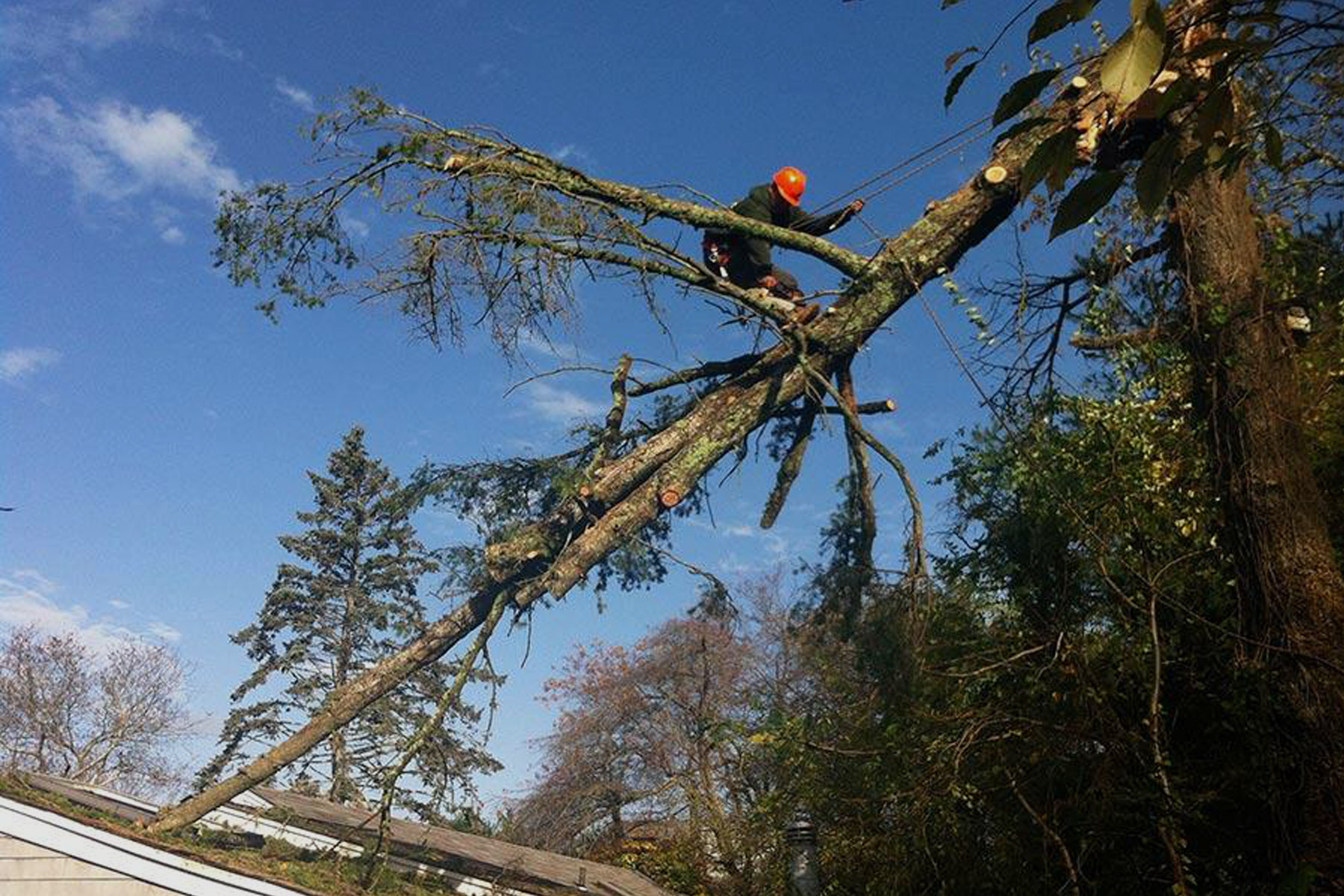
Professional tree removal at a home in Exeter, Rhode Island

The AllScapes Tree Removal Process

Every tree removal project begins with planning. Tree size, condition, surrounding structures, utilities, terrain, and equipment access all influence the removal method. Before work begins, our team evaluates the site and defines a scope intended to protect the home, landscaping, and surrounding property.

1. On-Site Evaluation

We assess tree condition, visible hazards, surrounding structures, utilities, access, and the removal method appropriate for the site.

2. Site Preparation

The work area and equipment route are planned around landscaping, driveways, structures, and other property features that could be affected.

3. Controlled Tree Removal

Professional equipment and rigging techniques are used to remove the tree. Sectional removal may be required where limbs and trunk pieces cannot be safely dropped into an open area.

4. Cleanup

Branches, logs, and debris are handled according to the estimate so the work area is ready for its next use.

5. Stump Grinding or Removal

Optional stump grinding or more extensive stump removal can prepare the area for lawn, landscaping, construction, or future planting.

Whether we are removing one backyard tree or completing a larger commercial project, the objective remains the same: carefully planned work performed with respect for the property from start to finish.

Professional Equipment. Careful Planning. Property Protection.

Tree removal requires more than chainsaws and manpower. Every project depends on selecting appropriate equipment, following established procedures, and protecting the surrounding property during the work. Our crews evaluate access, tree size, nearby structures, utilities, terrain, and landscape features before work begins.

Depending on the project, AllScapes may use:

  • Bucket trucks
  • Aerial lifts
  • Professional rigging systems
  • Wood chippers
  • Skid steers
  • Cranes for large or difficult removals

Equipment selection depends on the tree and the property. Planned travel routes, equipment placement, flotation tires where appropriate, and controlled removal methods can help reduce unnecessary effects on lawns, driveways, hardscapes, gardens, and nearby structures. Site conditions still matter, and any relevant limitations should be discussed during the estimate.

Property protection continues through cleanup. The agreed scope identifies how branches, logs, wood chips, and other debris will be handled. When removal is connected to construction or a major property change, AllScapes can also coordinate land clearing and site work.

Residential and Commercial Tree Removal in Rhode Island

From small residential yards to larger commercial sites, AllScapes develops the removal plan around each property’s access, surrounding structures, and intended use.

Residential Properties

  • Single-family homes
  • Luxury and waterfront properties
  • Apartments and condominium communities
  • Homeowner associations

Commercial and Project Sites

  • Commercial properties and office parks
  • Schools, churches, and nonprofit properties
  • Municipal and public properties
  • Construction and development sites

Every property presents different challenges. Tree size, condition, accessibility, nearby improvements, equipment requirements, and long-term plans for the site guide the proposed approach.

What Happens to the Stump After Tree Removal?

Tree removal and stump removal are separate services. After a tree is removed, the remaining stump can be ground below grade or excavated more extensively depending on how the property will be used.

Stump grinding is often appropriate when the goal is to remove the visible stump and reclaim the area for lawn or landscaping. More extensive stump removal may be preferable for construction, excavation, new planting, hardscaping, or other work where the stump and primary root mass would interfere.

Tree Removal Services Throughout Rhode Island

From our Exeter location, AllScapes serves residential and commercial properties throughout Rhode Island. Established service markets include Exeter, East Greenwich, North Kingstown, South Kingstown, Narragansett, Warwick, Westerly and Watch Hill, Charlestown, Jamestown, Coventry, and surrounding communities.

Property conditions—not the town name alone—determine the equipment, access plan, project scope, and estimate.

Frequently Asked Questions About Tree Removal

A tree may need removal if it is dead, severely leaning, storm-damaged, structurally unstable, too close to a building, or showing major decay. If the answer is unclear, a professional tree health evaluation can help determine whether removal is necessary or whether tree trimming or pruning may address the concern.

Cost depends on tree size, location, access, condition, equipment requirements, cleanup, and whether stump grinding is included. Trees near buildings, fences, pools, utility lines, or tight access areas often require additional planning and specialized equipment. An on-site estimate is the reliable way to price the work.

Requirements vary by municipality, property type, and local regulation. Rules may apply to protected trees, wetlands, coastal properties, historic districts, or commercial sites. Check with the applicable town or city when permitting may be required.

Insurance may cover removal when a tree falls because of a covered event and damages an insured structure, but coverage depends on the policy and circumstances. Maintenance, disease, age, and preventive removal are often treated differently. Confirm coverage with your insurer.

Many residential removals can be completed in one day, but timing depends on tree size, access, hazards, equipment, and cleanup. Large, complex, or limited-access removals may require more time and planning.

Tree removal and stump removal are separate services. AllScapes can include stump grinding or more extensive stump removal to prepare the area for lawn, landscaping, construction, or future planting.

Our crews plan around access and property protection. Specific travel routes, equipment placement, flotation tires where appropriate, and controlled removal techniques can help reduce unnecessary effects on lawns, driveways, hardscapes, landscaping, and nearby structures. Site conditions and equipment requirements must still be evaluated.

Yes. The estimate identifies how branches, brush, logs, and debris will be handled so cleanup expectations are clear before work begins.

Often, yes. Dormant landscaping or firm ground can sometimes improve access, but weather, snow, ice, soil, and operating conditions must be reviewed before scheduling winter work.

Start with an evaluation. Some trees can be preserved through pruning, clearance work, or other corrective care. Others may need removal to protect the property. AllScapes can recommend a practical next step based on the tree’s condition and location.

Related Tree and Property Services

Tree removal is often one part of a broader property project. AllScapes can coordinate removal with stump grinding, arborist evaluation, pruning, tree installation, or land clearing and site work when multiple services are needed.

Request Tree Removal in Rhode Island

If you have a hazardous, damaged, diseased, unwanted, or poorly located tree, AllScapes can evaluate the property and recommend a practical solution. We provide professional tree removal for residential and commercial properties throughout Rhode Island.

Tree Removal Service

25+ Years of Experience

Fully Insured

Residential and Commercial

Serving Rhode Island from our Exeter location.

Service Areas

Request a Free Estimate

Tell AllScapes about the property, the work you are considering, and any access concerns.